
Water exposure
Daily splashes, bathing and potential leaks require product-specific moisture guidance and careful detailing.
Flooring by room · Bathroom
Coordinate moisture, grip, cleaning and floor heat with the tile, vanity finishes and details that make the room complete.
Start with the room
Bathroom flooring must be selected as part of a moisture-conscious assembly. Tile and suitable luxury vinyl products are common directions, but product ratings, substrate, perimeter details and installation remain critical.
Porcelain, ceramic, grout, slip characteristics and floor heat each change the design and performance. Ordinary hardwood and laminate should not be treated as universally appropriate for bathrooms.
Room priorities
Daily splashes, bathing and potential leaks require product-specific moisture guidance and careful detailing.
Surface finish, format and grout joints affect feel and traction, especially when the floor is wet.
Maintenance expectations should account for joints, texture, cleaners and ventilation.
Floor heat, finished height and the doorway connection should be planned as one system.
Compare materials
Bathroom suitability depends on the exact material and installation system. Confirm specifications rather than relying on broad category claims.
A direction to consider

A direction to consider

A direction to consider
Design in context
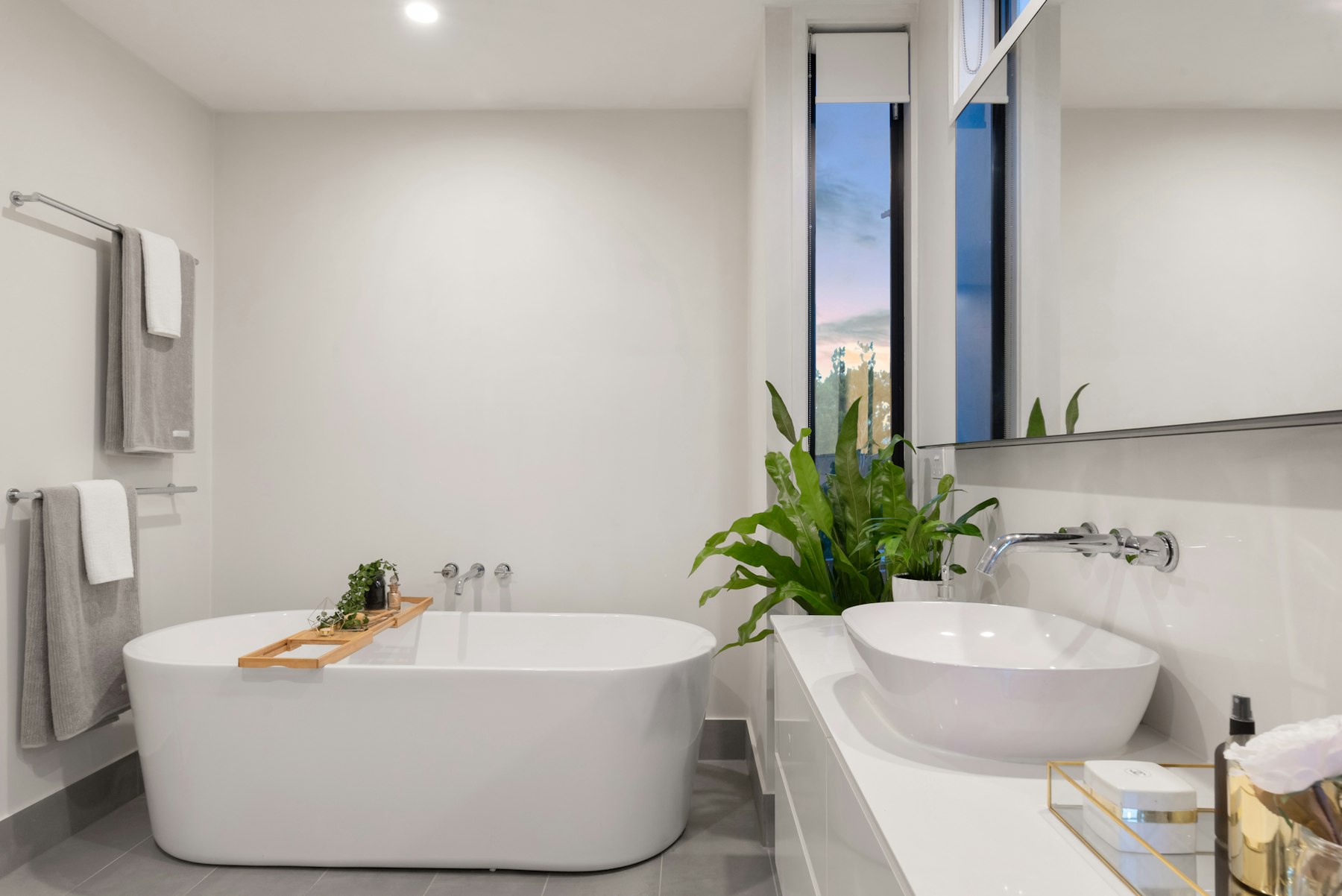
Bathroom floors sit directly beside vanity finishes, shower tile, tubs and plumbing metals. Format and grout can either simplify the room or create a deliberate rhythm across surfaces.
Installation & project planning
A refined bathroom floor depends on substrate, layout and moisture responsibilities that are largely invisible when the room is finished.
Tile format and resilient joints depend on a sound, appropriately prepared base.
Tile and grout are not the waterproofing system; wet-area responsibilities must be confirmed for the project.
Toilets, vanities, tubs and wall edges affect cuts, sequencing and finishing details.
Approved heating, membranes, materials and controls need compatible planning.
The Shop-from-Home advantage
At home, floor samples can be compared directly with vanity doors, counter surfaces, shower tile and the room’s actual lighting.
The visit also helps identify floor height, thresholds, fixtures and substrate questions that influence the suitable shortlist.

Questions homeowners ask
Porcelain tile, floor-rated ceramic tile and certain luxury vinyl products are common options. Suitability depends on water exposure, slip characteristics, substrate, installation system and the exact product rating.
Some luxury vinyl products are approved for bathrooms and offer practical maintenance. Approval, edge details, water claims and installation instructions vary, so the specific product must be checked.
Porcelain is generally denser and lower in water absorption, while some ceramic tile is rated for residential floors. Slip, size, finish, substrate and application rating are more useful than assuming one label is always better.
Many tile assemblies and some other products can work with approved heating systems. The heat system, membrane, floor covering and installation method must be compatible.
Grout colour and joint width influence the design, while grout type and maintenance affect daily care. Grout is not a replacement for waterproofing beneath wet-area tile.
Complimentary in-home consultation
Compare bathroom flooring alongside your vanity, tile and lighting during a complimentary in-home consultation.